Looking for relief from menstrual symptoms? THC and CBD, two key cannabinoids from cannabis, are gaining attention for managing period pain, inflammation, mood swings, and sleep issues. Here's the core takeaway:
- THC offers strong pain relief, especially for severe cramps and sleep disruptions, but its psychoactive effects may interfere with daily tasks.
- CBD provides a non-psychoactive option, helping with dull pain, inflammation, and mood without mental fog.
Both interact with the body's endocannabinoid system to ease symptoms, but choosing the right one depends on your needs, lifestyle, and tolerance.
Quick Overview:
- THC: Best for intense pain, nighttime use, and severe symptoms.
- CBD: Better for daytime relief, mild to moderate discomfort, and maintaining focus.
- Combined use (entourage effect) may enhance benefits while reducing side effects.
For safety and effectiveness, start with a low dose, consult a healthcare provider, and choose lab-tested products.
How Cannabis Helps with Menstrual Cramps and Pain - With CannaWize Co
How THC and CBD Work for Menstrual Symptoms
After understanding the basics of the endocannabinoid system (ECS), let’s dive into how THC and CBD specifically address menstrual symptoms. These two cannabinoids work through distinct mechanisms, which explains why they target different symptoms effectively.
THC for Menstrual Symptoms
THC binds directly to cannabinoid receptors, particularly CB1 receptors found in the brain and nervous system. Acting as a partial agonist at both CB1 and CB2 receptors, THC is known for its ability to relieve pain and inflammation. It also produces psychoactive effects, which many users find helpful for managing severe menstrual cramps and improving sleep disturbances caused by discomfort. Additionally, THC’s impact on mood can help stabilize irritability and promote relaxation during menstruation.
CBD for Menstrual Symptoms
Unlike THC, CBD doesn’t directly activate cannabinoid receptors. Instead, it modifies receptor activity, acting as a negative allosteric modulator of the CB1 receptor. This means it can reduce THC’s ability to bind, potentially softening its psychoactive effects. CBD’s anti-inflammatory properties, such as its ability to inhibit inflammatory cytokine production, make it particularly effective for alleviating menstrual pain. Research suggests that CBD is especially helpful for managing congestive symptoms, which include dull, achy pain, low energy, and mood fluctuations.
Which Symptoms THC vs. CBD Target Best
Understanding the strengths of THC and CBD can help in choosing the right option for specific menstrual symptoms. Here’s a breakdown:
-
THC is typically more effective for:
- Severe cramping
- Sleep issues tied to discomfort
- High stress and emotional swings
- Intense inflammation and muscle spasms
-
CBD works better for:
- Dull, persistent pain
- Mood-related challenges
- General inflammation and discomfort
- Symptoms that require focus and daytime management
There’s also evidence supporting the combined use of THC and CBD for enhanced relief, a phenomenon often called the entourage effect. When used together, CBD can moderate some of THC’s psychoactive effects, while THC may amplify CBD’s ability to reduce pain.
Finally, it’s worth noting that the expression of endocannabinoid enzymes fluctuates throughout the menstrual cycle. This variability could explain why individuals respond differently to cannabinoid-based treatments.
THC vs CBD: Benefits and Risks Compared
When deciding between THC and CBD for menstrual relief, understanding how each works and their potential risks can help you make a more informed choice. Both cannabinoids bring their own set of advantages, but they also come with distinct considerations that might influence your decision.
THC's key advantage lies in its ability to relieve pain effectively. A 2022 review highlighted THC’s role in reducing cramp severity for many users. By binding directly to CB1 receptors in the body, THC is known to alleviate intense pain, relax muscle tension, and even improve mood.
CBD, on the other hand, offers a gentler approach to managing menstrual symptoms. It helps by calming the nervous system and reducing inflammation, which can ease discomfort while also addressing stress and anxiety.
Both cannabinoids have research backing their effectiveness. For example, a study on high-CBD vaginal suppositories found that participants using CBD experienced noticeable reductions in the frequency and severity of menstrual symptoms compared to those using traditional treatments. In fact, 72.9% to 81.1% of CBD users reported moderate to significant symptom relief.
While THC can provide strong symptom relief, it’s important to weigh its potential impact on reproductive health. THC may disrupt the hypothalamic-pituitary-ovarian axis, leading to irregular menstrual cycles and reduced fertility. Dr. Jamie Lo from OHSU School of Medicine explains:
"While we don't yet know why THC influences the female reproductive system, we do know that the response appears to be dose dependent. This means that the higher concentration of THC that is being used, the more the reproductive system is affected."
Research shows that THC use is linked to higher rates of anovulatory menstrual cycles - cycles where ovulation doesn’t occur. Chronic moderate-to-heavy marijuana use was associated with anovulation in 38.3% of users compared to 12.5% in non-users. For those considering future family planning, Dr. Lo cautions:
"While starting a family may not seem like a priority in your early 20s, the downstream repercussions of regular marijuana use may indeed hamper longer term plans."
CBD, in contrast, carries fewer risks. It’s generally well-tolerated and has fewer side effects compared to traditional pain medications. However, individual responses can vary, as noted by Dr. Jenna Beckham:
"Everyone responds differently to CBD. Some find it very beneficial and therapeutic, and others may not benefit at all."
Side-by-Side Comparison Table
| Factor | THC | CBD |
|---|---|---|
| Pain Relief | Highly effective for severe cramping | Effective for persistent pain and inflammation |
| Psychoactive Effects | Produces a "high"; may cause drowsiness or dizziness | Non-psychoactive; maintains mental clarity |
| Mood Benefits | Improves mood, reduces stress and irritability | Soothes anxiety, calms the nervous system |
| Reproductive Risks | May disrupt menstrual cycles and fertility | No known effects on reproductive health |
| Legal Status | Federally legal in Delta-8/Delta-9 forms under 0.3% THC | Federally legal when derived from hemp |
| Side Effects | Drowsiness, dizziness, potential menstrual irregularities | Minimal side effects, generally well-tolerated |
| Best For | Severe symptoms, nighttime use, acute pain | Daily symptom management, workplace use, mild to moderate discomfort |
The table above breaks down the differences, helping you decide which cannabinoid might suit your needs best.
Ultimately, your choice between THC and CBD should align with your specific symptoms, lifestyle, and long-term health goals. For those exploring these options, experts recommend starting with a low dose and consulting a healthcare provider. For example, if you experience frequent cramping, a daily dose of 25 to 35 milligrams of CBD isolate, starting up to a week before your period, might be worth considering. Whether you lean toward THC or CBD, it’s essential to balance immediate relief with considerations for your overall reproductive health.
sbb-itb-0d19bd1
Research on THC and CBD for Menstrual Relief
The potential of cannabinoids like THC and CBD to ease menstrual symptoms is gaining attention in scientific circles. While research is still in its early stages, studies are beginning to shed light on how these compounds might help manage menstrual discomfort. These findings provide a foundation for exploring the unique effects of THC and CBD on menstrual health.
Evidence Supporting CBD
CBD has shown promise for addressing several menstrual symptoms. A 2024 study published in Nature revealed that high-CBD vaginal suppositories significantly reduced both the frequency and intensity of menstrual symptoms. Participants in the study also reported a decreased reliance on traditional pain medications.
Another study spanning three months found that CBD not only alleviated menstrual discomfort but also reduced anxiety and stress starting from the first month of use. These effects are linked to CBD's anti-inflammatory properties and its ability to interact with serotonin receptors (specifically 5HT1A). This interaction helps ease pain while also providing calming and mood-enhancing benefits.
THC's Role in Menstrual Symptom Management
THC, on the other hand, has been primarily studied for its pain-relieving properties, particularly in cases of severe menstrual cramps. A recent review highlighted THC's effectiveness in reducing cramp severity but also noted side effects such as drowsiness and dizziness. THC’s ability to relieve pain stems from its interaction with key receptors in myometrial tissue. Research suggests that cannabinoid agonists like THC can relax myometrial muscles, directly addressing the pain caused by dysmenorrhea.
Interestingly, studies show that cannabis use increases during the premenstrual phase, with many women turning to it for relief from physical discomfort during both the premenstrual and menstrual phases. However, THC's effects are dose-dependent, meaning careful dosing is crucial. Its psychoactive nature can also interfere with daily activities, which may limit its use during the day.
Research Limitations and Gaps
Despite encouraging findings, there are still significant gaps in the research. Large-scale studies comparing THC and CBD directly for menstrual relief are scarce. Most research focuses on individual cannabinoids rather than side-by-side evaluations, leaving questions about their relative effectiveness unanswered. Additionally, many studies rely on self-reported data rather than controlled clinical trials, which can introduce bias and affect the reliability of conclusions. For example, the 2024 Nature study is described as a "preliminary study", emphasizing the need for more rigorous methodologies.
Another key limitation is the lack of long-term safety data, particularly for THC. While dysmenorrhea affects up to 90% of women of reproductive age, the potential impact of regular cannabinoid use on hormonal cycles and reproductive health remains unclear. Variability in dosing and delivery methods across studies also complicates efforts to establish standardized protocols. For instance, oral preparations tend to have a delayed onset but longer-lasting effects, while inhaled methods work faster but wear off more quickly.
Addressing these gaps will be crucial for advancing our understanding of how cannabinoids can support menstrual health.
Choosing the Right Product for Menstrual Relief
Finding the ideal cannabinoid product to ease menstrual symptoms involves considering your specific needs, tolerance, preferred delivery method, timing, and legal factors. With about 75% of women experiencing cramps during their periods and 16–91% of women of reproductive age experiencing menstrual pain, effective relief is a top priority. Let’s dive into the key factors to help guide your decision.
Factors to Consider When Choosing Between THC and CBD
For severe cramps and intense pain, THC can provide strong relief, though it may come with side effects like drowsiness or dizziness. If your discomfort stems from inflammation or you’re looking for general pain management, CBD products are a solid choice. They can ease menstrual cramps and reduce inflammation without the psychoactive effects.
Your personal tolerance plays a big role, too. If THC has caused unpleasant effects for you in the past, starting with a high CBD-to-THC ratio - like 20:1 - might be a better option. For those new to cannabinoids, starting with a low dose and gradually increasing it is the best approach.
The delivery method you choose can also shape your experience. Oral options like gummies or capsules take longer to kick in but provide longer-lasting relief. On the other hand, inhaled forms like vapes work quickly, making them ideal for sudden cramp episodes, although their effects don’t last as long. For consistent relief throughout your cycle, edibles or tinctures might be the better fit.
Your daily routine is another consideration. THC’s psychoactive effects can interfere with activities, making it less suitable for daytime use. CBD, being non-psychoactive, allows for symptom relief without disrupting your day. Before starting any cannabinoid product, it’s wise to consult with a healthcare provider to discuss dosages and ensure safety.
Finally, legal considerations and product quality should also influence your choice.
Legal and Accessible Options in the U.S.
The evolving legal landscape has made cannabinoid products more accessible for menstrual relief. Federally legal options include hemp-derived CBD and Delta-8 THC products that meet the 2018 Farm Bill’s requirements. These products don’t require a medical card and can be shipped discreetly to many states.
However, product quality can vary widely in this largely unregulated market. A 2015 study by Vandrey et al. revealed that 25% of cannabinoid products were underlabeled and 60% were overlabeled in terms of cannabinoid content. This highlights the importance of purchasing from reputable brands with rigorous testing standards.
Look for products with transparent labeling and third-party test results. Packaging should include key details like the manufacturing date, expiration date, lot number, and net weight or volume. Always verify that the product has a certificate of analysis (COA) from an accredited lab. Safety features like child-resistant packaging and tamper-proof seals are also essential.
Several formulations cater to menstrual pain relief:
- Gummies: Offer precise dosing and long-lasting effects. Prices typically range from $27.99 for a 30-count pack to $44.99 for 60 gummies.
- Transdermal patches: Provide controlled, steady relief. For example, Pure Kana’s 60 mg patch is available for $17.99.
- Tinctures: Allow flexible dosing with quicker effects when taken sublingually. Full-spectrum options are priced between $59.99 and $129.99.
Diet Smoke: Tailored Cannabinoid Experiences
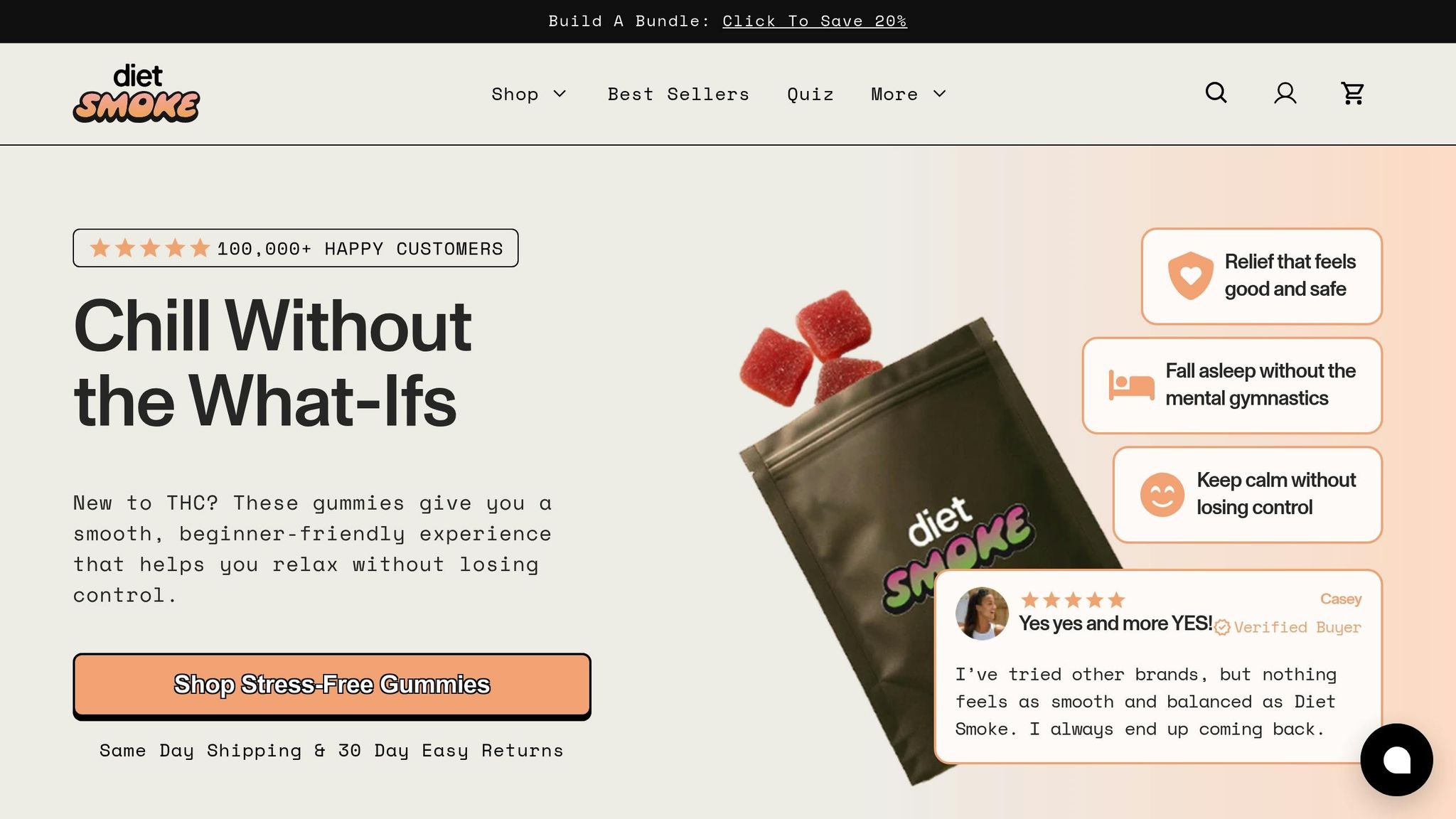
Diet Smoke offers premium, lab-tested cannabinoid products designed to address a variety of wellness concerns, including menstrual relief. Their selection includes federally legal THC and CBD options that don’t require a medical card.
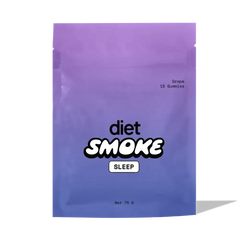
For those struggling with sleep, Diet Smoke’s Grape Sleep Gummies ($32.00) feature mild THC to promote rest and recovery. The Cherry Lime Gummies ($39.00) provide balanced THC levels, ideal for moderate symptom management without overwhelming psychoactive effects.
If mood swings are an issue, the Cosmic Cherry Gummies ($30.00) are formulated to uplift mood and spark creativity. For combating menstrual fatigue, the Lemon Super Haze ($65.00) offers high-THC for maintaining energy and productivity. For quick relief, the Blue Dream Disposable Vape ($65.00) delivers fast-acting, high-THC Sativa effects, perfect for sudden cramp episodes.
All Diet Smoke products undergo rigorous lab testing and come with a 100% lifetime happiness guarantee, ensuring quality and customer satisfaction. Their Fort Lauderdale–based team, with deep expertise in THC, is committed to providing solutions tailored to women’s wellness.
"CBD may positively affect mood by interacting with the body's endocannabinoid system, which plays a role in regulating emotions."
Additionally, the entourage effect - the combined action of multiple cannabinoids - may amplify therapeutic benefits, offering more well-rounded relief compared to single-compound products.
THC vs CBD for Menstrual Symptoms: Final Thoughts
THC and CBD each offer unique ways to manage menstrual discomfort. THC is often chosen for its ability to tackle severe cramps through strong pain relief, though it can come with side effects like drowsiness and dizziness, which might disrupt daily routines. A 2022 review highlighted THC's effectiveness in reducing cramp severity for many users. On the other hand, CBD provides relief without the psychoactive effects, easing pain by relaxing muscles and reducing overall discomfort. Notably, a 2024 study on CBD vaginal suppositories showed promising results in managing pain while potentially reducing reliance on traditional pain medications. These differences make THC and CBD viable but distinct options for menstrual relief, each with its own set of benefits and considerations.
Cannabis isn't just useful for cramps - it can also help alleviate symptoms associated with PMS, perimenopause, and menopause. Additionally, many women have reported finding relief from more complex conditions like endometriosis and polycystic ovary syndrome (PCOS) through cannabis use.
However, product quality and safety are critical when selecting cannabinoid-based options for menstrual relief. The cannabis market faces challenges with mislabeling, with research showing that up to 25% of products are mislabeled and 60% contain inaccurate information. A Colorado study revealed that four out of 15 tested cannabis products failed to meet state standards.
To ensure safety and effectiveness, lab testing is essential. This process verifies that products are free from harmful substances like pesticides, heavy metals, mold, and bacteria, while also confirming accurate THC and CBD levels for consistent dosing. Always look for products with a Certificate of Analysis (COA) and third-party testing results to ensure you're making an informed purchase.
For those seeking trustworthy, lab-tested options, Diet Smoke offers federally legal THC and CBD products tailored to various wellness needs. Their Cherry Lime Gummies ($39.00) provide balanced THC for managing moderate symptoms, while the Grape Sleep Gummies ($32.00) are a good choice for addressing period-related sleep disruptions. For fast-acting relief during sudden cramps, the Blue Dream Disposable Vape ($65.00) delivers quick effects when you need them most.
Ultimately, choosing between THC and CBD depends on your specific symptoms, tolerance, and lifestyle. Many women find that starting with a low dose and gradually adjusting helps pinpoint the best solution for their needs. Whether you opt for THC to address intense pain or CBD for gentler support, focusing on high-quality, lab-tested products ensures a safer and more effective approach to menstrual wellness. For quick relief during sudden cramps, many women also find a reliable weed cart to be a practical and discreet solution.
FAQs
How do THC and CBD help with menstrual symptoms through the endocannabinoid system?
THC and CBD interact with the endocannabinoid system (ECS) in distinct ways to help manage menstrual symptoms like cramps, mood changes, and inflammation. THC directly binds to CB1 receptors in the brain and nervous system, which can help reduce pain, lower inflammation, and even lift your mood. This makes it a solid choice for tackling severe cramps or discomfort.
On the other hand, CBD takes a more indirect route. It influences TRPV1 receptors, which play a role in regulating pain and inflammation. This interaction creates a calming, anti-inflammatory effect, making CBD a good option for easing milder symptoms or helping you relax during your cycle.
When used together thoughtfully, these compounds can complement one another, offering relief tailored to your specific needs. Be sure to consult a healthcare professional to determine the best approach for your body and symptoms.
Can using THC or CBD for menstrual relief affect long-term reproductive health?
Long-term use of THC could influence reproductive health, potentially leading to issues like menstrual irregularities, ovulatory problems, and shifts in reproductive hormones. For men, studies have linked it to reduced semen quality and other fertility challenges. Similarly, extended or high-dose use of CBD might also pose risks, with some research pointing to possible effects on fertility and reproductive function.
Although both THC and CBD may help alleviate menstrual symptoms, it’s crucial to approach their use with care. If you’re planning for pregnancy or have concerns about reproductive health, consulting a healthcare professional is essential to understand any potential long-term implications.
How do I choose between THC, CBD, or a combination of both for managing menstrual symptoms?
Choosing between THC, CBD, or a mix of both for menstrual symptom relief depends on your unique symptoms, tolerance, and the kind of relief you're looking for.
THC is often used to ease intense cramps and discomfort. However, it can come with side effects like drowsiness or dizziness, and its psychoactive effects might not be for everyone. It’s a better option if you’re seeking stronger relief and are okay with its mind-altering properties.
CBD, in contrast, doesn’t cause a “high” and is generally easier to tolerate. Known for its anti-inflammatory benefits, it can help with cramps, mood swings, and overall discomfort. For more severe symptoms, higher doses of CBD might be more effective.
Some people find that combining THC and CBD in balanced amounts works best. The THC can tackle sharp pain, while CBD offers soothing, anti-inflammatory support. To figure out what works for you, start with a low dose and adjust as needed. For tailored advice, reaching out to a healthcare provider is always a smart move.
Related posts
- CBD vs THC: Understanding Key Differences
- Research on THC Dosage for Pain Relief
- THC vs CBD for PMS Symptoms
- How THC and CBD Work Together for Pain